

Wet-Area Mat Care Label Guide for Pool and Spa Manufacturers
Pool and spa manufacturers can lose a lot of after-sales clarity after a wet-area mat leaves the product-development table. The accessory may be approved, the color may look right, and the dealer kit may be ready, but the person who cleans the mat six months later may never see the original specification notes. That gap is where unrealistic cleaning habits, storage mistakes, and weak claim records begin.
This guide is for product, procurement, and dealer-support teams building care labels for EVA wet-area mats used around pool, spa, dock, garage, and leisure-water contexts. It does not replace product-specific test data, supplier instructions, or legal review. It gives manufacturers a practical way to decide what should appear on the label, what belongs in a care card, and what dealer teams should collect when a customer reports a problem.
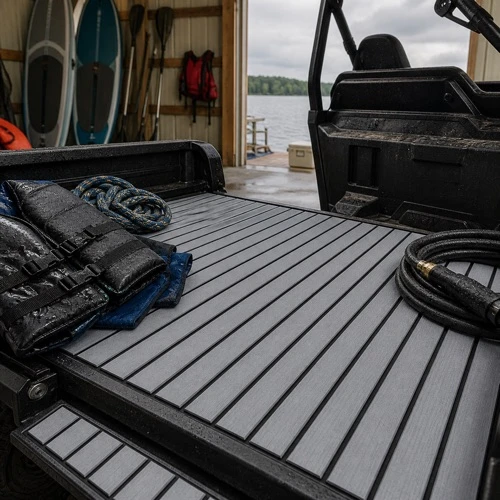
Why a Care Label Is a Product-Control Tool
A care label is often treated as a packaging detail, but for wet-area mats it controls three important handoffs. It tells the end user how to clean and dry the mat, gives dealers a consistent explanation when customers ask about care, and creates a reference point when someone reports staining, lifting, odor, fading, curling, or surface damage.
Without a label system, every dealer, installer, and customer-service person may explain care differently. One person may recommend aggressive scrubbing, another may promise a result that was never approved, and another may accept a claim without asking where the mat was used or how it was stored. A short, clear care label reduces that drift. It turns the mat from a loose accessory into a controlled product with an understood use boundary.
Start With the Approved Use Case
The label should begin with the use case the product team actually approved. A wet-area mat for a spa step, a dock-adjacent standing zone, a locker-room display, and a boat accessory bundle may all need different language. Do not write one generic label and attach it to every SKU if the products are used in different environments.
Before drafting the label, confirm the intended surface, expected water exposure, footwear use, storage condition, traffic level, and whether the mat will be sold as a loose accessory, included in a kit, or supplied for a fitted area. If the internal approval record says the mat is for a limited-use accessory program, the label should not quietly imply permanent installation, chemical resistance, or industrial-duty performance.
This is where pool and spa manufacturers should separate buyer-facing wording from internal supplier notes. The supplier file may include material names, backing options, color references, and packing instructions. The care label should translate only the approved user instructions into plain language.
Decide What Fits on the Label
The physical label has limited space, so it should carry the highest-risk instructions first. A good label usually covers basic cleaning, drying, storage, and stop signals. It should be readable without a sales representative standing next to it.
For a wet-area mat, consider short instructions such as removing loose dirt before washing, rinsing with clean water after normal wet use, drying the mat before enclosed storage, and avoiding unapproved cleaners or sharp tools. Keep the wording conditional when the exact product limit has not been documented. For example, a buyer-safe label can say, "Use only the cleaning method supplied with this SKU," rather than inventing a universal chemical tolerance.
Avoid crowding the label with marketing claims. The label is not the place to promise a lifespan, warranty outcome, test rating, or universal surface compatibility unless those claims are backed by approved evidence for that exact product.
Move Longer Instructions to a Care Card
Many useful instructions are too long for the label. Put them in a care card, QR-linked page, dealer sheet, or packaging insert. The care card can explain the routine more clearly: what to do after wet use, how to handle sand or grit, when to dry before storage, when to stop using a damaged piece, and what information to collect before contacting the seller.
The care card should also explain what not to do. If the manufacturer has not approved harsh chemicals, pressure washing, solvent cleaning, sanding, heat exposure, or folding during storage, do not leave those topics silent. Silence invites improvisation. Use calm wording that helps the buyer avoid misuse without sounding defensive.
For dealer kits, the care card should match the sample, packaging, listing, and customer-service script. If each channel uses different care language, the dealer network will not know which version to trust.
Build the Cleaning Language Carefully
Cleaning language should be practical, not heroic. The goal is to help normal users maintain the mat while avoiding unsupported promises. Start with routine conditions: water, loose dust, footwear marks, outdoor debris, and drying after use. Then add an escalation path for unusual stains, adhesive concerns, odor, or surface damage.
Use verbs a customer can understand: rinse, wipe, dry, inspect, store flat, keep away from sharp edges, and contact the dealer if damage appears. Avoid vague phrases such as "maintenance free" or "chemical proof." Those phrases are easy to write and hard to defend.
If a product team wants stronger wording, require evidence before adding it. A care label should not be where a manufacturer first discovers that the team has no approved position on cleaners, storage temperature, pool chemicals, adhesive exposure, or outdoor storage.
Give Dealers a Claim-Triage Checklist
A good care label reduces claims, but it cannot prevent every issue. Dealer teams need a simple checklist for the first customer conversation. Ask where the mat was used, how it was cleaned, whether it was stored wet, whether it was exposed to chemicals or sharp tools, and when the issue first appeared. Request photos of the full mat, the problem area, the surrounding surface, and the label or SKU identifier.
This information protects both sides. The manufacturer can see whether the complaint relates to use, storage, installation, transit, cleaning, or product condition. The customer gets a more professional response because the dealer is not guessing. The supplier gets clearer evidence if the issue needs escalation.
Do not turn the label into a legal wall of text. Keep the label useful and put the longer claim process in the care card, dealer portal, or support template.
Control Revisions Like a Product Spec
Care labels should have revision control. If the mat color, surface texture, backing, packaging, intended use, or dealer program changes, the care label should be reviewed too. A label written for one accessory kit may not be safe to reuse on another kit just because the material looks similar.
Track the label version, approval date, product or SKU group, language version, and where the label appears. If labels are printed in batches, keep a record of which batch was used with which shipment or dealer program. This does not need to be complicated. A simple version code can prevent weeks of confusion when a dealer sends a photo of old care language.
For multilingual packaging, avoid machine-translating care warnings without review. Cleaning and storage instructions are operational text. A small translation error can change the customer behavior the label is supposed to control.
What to Include Before Launch
Before the wet-area mat program launches, confirm these care-label items:
- The approved use case is clear enough for the label and care card.
- Cleaning instructions avoid unsupported chemical, durability, or warranty claims.
- Drying and storage notes match the product's intended use and packaging.
- Dealer teams know what photos and order details to collect for complaints.
- The label, care card, product listing, and dealer sheet use the same wording.
- A revision code or date appears in the internal record.
- Any QR code, landing page, or downloadable file points to the current version.
- The label does not imply certification, test results, or performance claims that have not been approved.
This checklist is most useful before the packaging artwork is locked. Once labels are printed, every wording issue becomes slower and more expensive to fix.
Where XYF Marine Fits Into the Review
When discussing wet-area mat sourcing with XYF Marine, share the intended application, product photos or drawings, sample expectations, packaging concept, dealer channel, and any care-language requirements already used by your team. If the care label must match a retailer, distributor, or warranty process, include that context early so the sample review is not limited to color and surface appearance.
XYF Marine can review the information you provide for a sourcing discussion, but the buyer should still approve final care wording against its own product policy, legal requirements, and market channel. Care labels sit at the intersection of product design, customer support, and risk control; they should not be treated as decoration.
Related Reading for Pool and Spa Programs
If your team is still defining the accessory itself, start with the EVA Foam Wet-Area Mat Specification Guide. It helps organize the approved use case before care wording is written.
For kit planning, pair this label workflow with the Pool and Spa Mat Accessory Kit Guide. The label, care card, and dealer handoff should travel with the kit, not arrive as a late packaging afterthought.
For sample review, the EVA Marine Deck Sample Kit Guide gives a useful model for comparing physical samples with documented expectations. For broader cleaning language, the EVA Marine Deck Maintenance Guide can support dealer education. If a customer issue appears later, the Boat Flooring Complaint Intake Guide shows what records dealer teams should collect before escalation.
FAQ
Should the label include every cleaning detail?
No. The label should cover the essential instructions that prevent common misuse. Longer explanations belong in a care card, QR-linked page, dealer sheet, or support document.
Can one care label cover every wet-area mat?
Only if the approved use case and care limits are genuinely the same. If the mat design, backing, installation method, packaging, or customer channel changes, review the wording before reusing it.
Should manufacturers add warranty promises to the label?
Do not add warranty or performance promises unless they are approved for that exact product and supported by evidence. A care label should guide use and support claim triage, not create unsupported obligations.