

Boat Flooring Sales-Claim Review Guide for Marine Traders
Marine traders often sit between product information and the person who will rely on it. A supplier may send a product image, a short feature list, a sample name, and a quotation. A dealer may ask for a listing, a customer may want a comparison, and a catalogue team may ask for a ready-to-publish description. The risk is not simply a spelling error. A confident-sounding sentence can turn an unconfirmed detail into a promise that follows the order long after the original email is forgotten.
A boat flooring sales-claim review is a simple control before a statement reaches a buyer. It does not make the trader a laboratory, engineer, or legal reviewer. It separates what is documented, what is visibly shown, what needs qualification, and what should not be said until the responsible party provides evidence.
Start With the Exact Item, Not a Generic Product Name
The first question is: which item is the statement about? "EVA boat flooring" is a product family, not a sufficient identity for a sales claim. A controlled review begins with the current item record: product code or supplier reference, color or visual reference, surface description, format, and the version of the drawing, sample, or quotation that applies.
This is why a technical data sheet is useful before a sales sheet is written. It gives the team a place to check what the product record actually says. If the trader cannot connect a line of copy to an item record, a sample label, or a written supplier response, it should be treated as a question rather than a product fact.
Similar-looking materials should not be merged because they share a color family or a marketing name. A later reorder, buyer complaint, or project change is much easier to review when the original wording points back to a defined item.
Sort Every Statement Into Four Buckets
Before approving a listing or quotation attachment, label each meaningful statement:
- Documented product fact: a detail that appears in the current item record, approved data sheet, or other primary evidence.
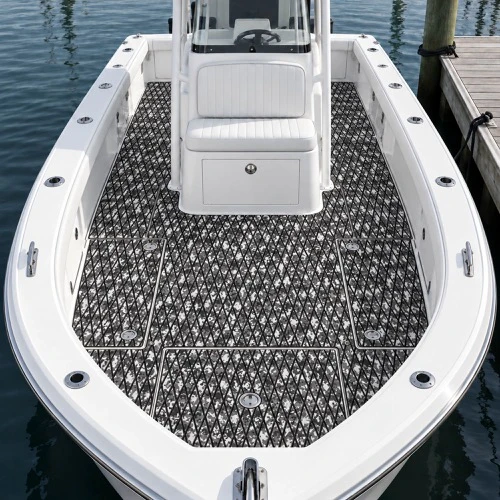
- Visible description: a neutral observation of an image or sample, such as a dark diamond-pattern surface or a blue reveal line.
- Qualified buyer guidance: a conditional statement that tells the buyer what to check, without promising a result.
- Unsupported claim: a performance, commercial, certification, fit, or comparison statement without current evidence for that exact item.
The distinction matters. "The image shows a patterned surface" is a visible description. "This surface will prevent slipping" is a performance claim and needs item-specific support. "Confirm the intended wet-use conditions and any required testing before approval" is qualified buyer guidance. It is useful without pretending to know an outcome.
Review Images Separately From Product Evidence
An attractive boat image can help a buyer understand visual context, but it does not prove the details of a particular order. Treat images as one evidence type, not the entire file.
For each proposed image, record where it came from, what it visibly shows, which product reference it is associated with, and whether it is illustrative or documentary. An illustrative image may show a boat deck, hatches, grooves, or a color contrast. It should not be captioned as a completed customer project, test result, production record, or shipment unless that documentary status is supported.
This review also catches a common handoff problem: a sales image may show a layout, while the quotation covers only uncut material. The image can remain useful if its caption stays factual and the commercial scope stays clear. Do not let a visual suggestion become an included-service promise.
Keep Claims Aligned With the Quoted Scope
Sales wording and the commercial file must describe the same thing. If a description says "custom kit," the associated order record should define whether cutting, templates, drawings, labels, and approvals are included. If a description implies a particular backing, packaging, or finish, the quotation should identify that selection rather than leaving it in a marketing attachment.
Use the boat flooring quote comparison guide when the trader is normalizing supplier offers. Once the quote is selected, carry only the confirmed scope into buyer-facing wording. Do not bridge a missing detail with a phrase such as "standard," "included," or "suitable for all boats."
Flag wording that needs an owner
Create a short review queue for terms such as certified, tested, guaranteed, waterproof, non-slip, marine-grade, exact fit, fast delivery, lifetime, or compatible. Some may be supportable for a specific product and market; some may need revised wording; some may need to be removed. The trader's job is to assign each statement to the person or document that can support it, not to resolve it by guesswork.
Build a Small Evidence Packet Before Dealer Handoff
Dealer-facing copy becomes more reliable when it travels with a compact evidence packet. For a given item, it can include the controlled product reference, current approved image or sample reference, the latest quotation scope, known application boundaries, and a list of open questions.
Use consistent names across the packet. The SKU naming guide explains why a controlled item name makes reorders and customer support clearer. The sample-board labeling guide is a practical companion when physical samples are used in the sales conversation.
The packet should also make omissions visible. If there is no approved test record, lead-time confirmation, or boat-specific drawing, say that the information is pending. A clear gap is safer and more useful than a broad claim that later needs to be withdrawn.
Use a Two-Person Check for High-Risk Copy
Not every caption needs a committee. But a second reviewer is valuable when copy makes a performance statement, names a certification, describes a commercial term, compares products, or refers to a customer, project, factory, or test.
- Which exact item does this sentence describe?
- What current primary evidence supports it?
- Does the image show only what the caption says it shows?
- Does the wording match the current quotation and intended sales channel?
- Should the sentence instead be a buyer check, a qualified statement, or an open question?
This is not a barrier to selling. It is a way to keep fast-moving sales material from becoming a source of avoidable rework.
Handle Buyer Questions Without Inventing an Answer
A buyer may ask whether a material will fit a specific boat, tolerate a local condition, meet a test requirement, or arrive by a particular date. A trader can be helpful without converting a question into an unverified promise. First collect the item reference, application, photos or drawings if relevant, destination context, and the exact question. Then route the request to the source that can answer it.
The technical support intake guide offers a useful evidence-first model. A focused question with the right references is more likely to receive a usable answer than a broad request for reassurance.
Preserve the Review When the Order Moves Forward
The sales-claim review should remain with the order record. When the material is released, use the pre-shipment photo checklist to collect supplier-side visual evidence without confusing it with the original sales image. If the order changes, update the item reference, scope, and buyer-facing copy together.
This creates a simple chain: controlled item, approved wording, quoted scope, shipment evidence, and a clear record of any changes. It will not eliminate every dispute, but it gives traders a factual starting point when different parties remember the sale differently.
A Practical Review Template
Before releasing a boat flooring listing, dealer sheet, or quotation attachment, record:
- Item reference and current product version.
- Proposed statement or caption.
- Evidence source and date.
- Image source, visible content, and illustrative/documentary status.
- Quotation field that confirms the commercial scope.
- Qualified wording or open question where evidence is absent.
- Reviewer, date, and next action for anything still pending.
The value of this template is not administrative volume. It lets a future reader see the difference between what was known, what was shown, and what still required confirmation.
FAQ
Can a trader use a supplier image in a boat flooring listing?
Only if the trader has the appropriate authorization and can describe the image accurately. The caption should state only what is visibly shown and should not turn an illustrative scene into evidence of a specific customer installation, order, or product result.
Is "marine-grade" safe to use in every product description?
No. Treat it as a claim that needs a defined meaning and current support for the exact item and market. If the evidence is unavailable, use a neutral material description and ask the buyer what requirement must be confirmed.
What should happen when a dealer asks for a promised fit or delivery date?
Capture the exact boat or project reference and the requested outcome, then route it for confirmation against the current drawing, order scope, production information, and freight plan. Do not make an unverified commitment in the sales sheet.
Work With XYF Marine
When discussing a boat flooring program with XYF Marine, share the item reference, intended application, current sample or image reference, requested wording, and any buyer requirement that needs confirmation. A clear review file helps keep the product discussion, quotation scope, and downstream sales materials aligned with the evidence available for the project.