

Aluminum Workboat Flooring Guide for Marine Supply Stores
Aluminum skiffs, jon boats, and small workboats create a different sales conversation from a polished cruiser or a family pontoon. The customer may walk into a marine supply store with mud on the deck, exposed ribs, loose gear, fuel stains, old carpet adhesive, or a boat that is used for fishing, dock service, crab pots, marina work, or utility transport. A standard color-card conversation is not enough.
This guide gives marine supply stores a practical workflow for qualifying aluminum workboat flooring requests before recommending samples, quoting cut-to-size work, or sending details to XYF Marine for supplier review. It does not promise a specific material result. It helps the store collect the right questions, photos, and decision notes so the buyer can move from "I need flooring for this boat" to a supplier-ready packet.
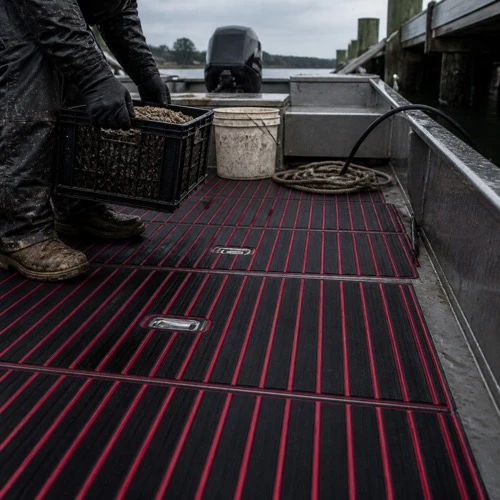
Why Aluminum Workboats Need a Separate Intake
Aluminum utility boats are often simple, hard-working, and heavily modified over time. One boat may have a flat deck insert, another may expose ribs and channels, and another may combine removable hatches, welded boxes, fuel tanks, battery trays, and wet storage areas. The store needs to know more than the boat length.
The first question is not "which color do you want?" It is "how is the boat actually used?" A weekend fishing skiff, a marina service boat, and a small commercial workboat can all be aluminum boats, but their wear patterns and buyer priorities are not identical. A retail conversation that starts with use case will produce a better sample recommendation and a cleaner supplier request.
Start With Use Case Before Product Options
Ask the customer to describe the boat's workday. Does it carry fishing gear, coolers, bait buckets, crates, dock tools, passengers, pets, or sharp equipment? Is the deck usually wet, muddy, sandy, or exposed to fish residue? Does the customer remove gear after each trip, or does equipment stay on the boat between uses?
These questions help the store avoid overselling a purely cosmetic solution. If the buyer needs flooring mainly for standing comfort and appearance, the conversation can focus on deck zones, color, texture, and sample approval. If the boat is used for rough utility work, the conversation should also cover cleaning expectations, high-contact zones, edges, hatches, and whether the customer understands that flooring is one part of a larger deck-preparation decision.
Record the use case in plain language. A note such as "aluminum skiff used for weekend fishing and muddy ramp launches" is more useful than "needs black flooring." The first note gives context for pattern, zones, and cleaning guidance. The second only names a preference.
Identify the Deck Structure and Working Zones
Marine supply stores should ask customers to map the boat by working zone. Common zones include the bow casting area, center floor, stern platform, helm or tiller area, storage lids, battery compartment, side benches, and step surfaces. For each zone, ask whether the customer expects a full sheet look, separate panels, removable pieces, or only small traction pads.
Aluminum boats can include ribs, seams, drain channels, welded brackets, screw heads, rivets, hatches, and non-flat transitions. These features matter because they affect where a panel can sit, where water should move, and where edges may be exposed. The store does not need to solve every technical point during the first conversation, but it should not hide these variables from the supplier.
Ask for one wide photo of the full boat interior and one closer photo of each zone. If the customer has a drawing, template, or previous flooring pattern, keep it with the photos. A photo without a zone name can be hard to interpret later, especially when several similar aluminum boats are being discussed at the same time.
Check the Existing Surface Without Making Promises
Before discussing adhesive backing, cutting, or final appearance, ask what is currently on the deck. Is it bare aluminum, painted aluminum, old carpet, old foam flooring, diamond plate, plywood panels, non-skid coating, or mixed surfaces? Has anything been removed recently? Are there loose edges, residue, corrosion concerns, trapped dirt, or areas that stay wet?
The store should avoid making unsupported installation promises from a counter conversation. A photo can show what is visible, but it cannot prove surface readiness, future adhesion, chemical exposure, or long-term performance. When the condition is uncertain, write the uncertainty down and ask the customer to provide better photos or get local installation advice before treating the project as ready.
This is where an internal store checklist helps. Mark each zone as "ready to sample," "needs surface review," "needs template," or "outside store scope." That language is safer and more useful than a vague yes or no.
Drainage, Hatches, and Gear Paths Matter
Small aluminum boats often work around water, mud, fish residue, and gear movement. Flooring should not be discussed as a single decorative panel if the boat has drain paths, removable hatches, bilge access, fuel lines, storage lids, or gear that slides across the deck. A good intake asks where water goes, where the customer stands, and which openings must remain easy to use.
Photograph hatches, handles, hinges, fasteners, and any deck openings that could affect panel boundaries. If the buyer wants a cut-to-size program, these photos help the store decide whether the job belongs in a simple store-level workflow or needs a more complete drawing and template review.
Use Samples to Confirm Preference, Not to Replace Evaluation
Samples are useful for color, pattern, hand feel, and buyer confidence. They are not a complete substitute for project evaluation. A customer may love a sample at the counter but still have a deck that needs better photos, a template, or local preparation before the supplier can discuss the project clearly.
For aluminum workboat flooring, give the customer a structured sample task. Ask them to compare the sample under daylight, near the boat if possible, and beside the surfaces it will touch. Ask whether the pattern suits the boat's use rather than only the showroom lighting.
If the store sends a sample request to XYF Marine, include the use case, boat type, preferred color family, visible deck zones, and whether the customer is asking for material selection, cut-to-size discussion, or supplier review of a future custom project.
Decide Whether the Store Is Selling Material, Cutting Service, or Supplier Review
One of the easiest ways to create confusion is to mix service levels. A store may sell sheet material, offer cut-to-size help, collect templates, or connect a buyer with a supplier for a more detailed conversation. These are different workflows.
For a simple material sale, the buyer needs enough information to select a suitable format and understand that local installation choices remain their responsibility. For a cut-to-size conversation, the store needs zone dimensions, edge expectations, cutout details, and customer approval before cutting. For supplier review, the store should prepare a packet with photos, notes, preferred samples, and questions.
Define this scope before taking the order. It protects the customer, the store, and the supplier from assuming that a casual counter conversation has already approved technical decisions.
Build a Supplier-Ready Packet
A supplier-ready packet should be boring, organized, and factual. Start with the customer name or project code, boat type, use case, deck zones, preferred sample direction, and the decision needed. Then attach wide photos, detail photos, drawings or templates if available, and a short note about unresolved questions.
Do not bury the supplier in unrelated images. Choose the images that explain the decision: full interior view, zone photos, surface-condition photos, and close-ups of hatches, drain paths, hardware, or odd transitions.
Keep illustrative or AI-generated product scenes separate from actual project evidence. Illustrative images can help explain a pattern or application mood, but they should never be presented as proof of a specific customer installation, factory test, production capacity, certification, or completed OEM project.
Connect Store Advice to Existing Workflow Content
If the buyer is still deciding whether EVA flooring fits a fishing or utility use case, the broader fishing and workboat specification guide is a better starting point. It helps frame the application before the store asks for project details.
When the store is considering its own cutting service, the cut-to-size program guide for marine supply stores explains how to separate customer approval, cutting scope, and handoff. If the boat surface looks questionable, use the substrate assessment guide to keep the discussion factual instead of guessing.
For custom work, the drawing and template guide helps the buyer understand what a supplier needs before cutting or production decisions. For backing questions, the adhesive backing guide keeps the conversation focused on specification questions rather than unsupported promises.
FAQ
Is aluminum workboat flooring a different topic from general boat flooring?
Yes. The material category may overlap, but the intake should be different because aluminum skiffs and utility boats often have exposed ribs, wet work conditions, gear movement, hatches, and surface-condition questions that affect the project packet.
Should a marine supply store accept photos instead of templates?
Photos are useful for screening and supplier discussion, but they do not replace templates or drawings when fit, cutouts, or custom boundaries must be confirmed. Treat photos as evidence for review, not as automatic production approval.
Can the store promise adhesion or long-term performance from a sample?
No. A sample can help the customer evaluate appearance and feel. Adhesion and long-term use depend on surface condition, preparation, installation choices, and real use conditions, so unsupported guarantees should stay out of the sales conversation.
What should the customer send first?
Ask for a full interior photo, photos of each deck zone, close-ups of hatches or hardware, notes on how the boat is used, and any drawing, template, or previous flooring pattern. That is enough to start a responsible review conversation.
Talk With XYF Marine
For aluminum skiff or workboat flooring questions, send XYF Marine the boat use case, preferred sample direction, deck-zone photos, and any drawings or templates available. A clear packet helps the discussion stay practical, factual, and ready for the next sourcing or quotation step.